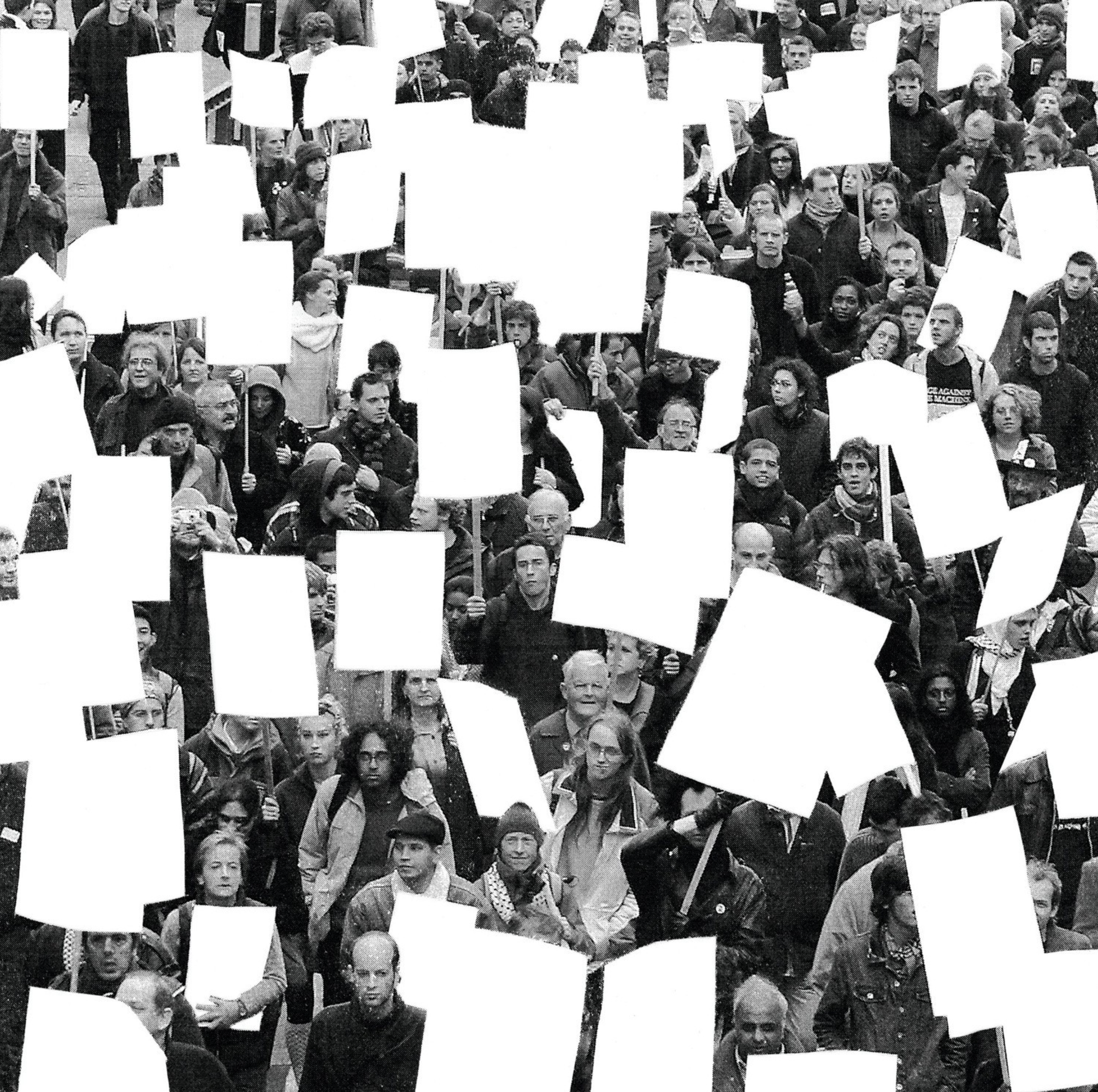
Products that matter inhabit a culture rather than merely serve a market. Before we design anything, we need to understand the world your customers already live in.
We map the mythology, rituals, status codes, and moral architecture of the creative world your customers inhabit.
A cultural framework that every downstream design decision can be tested against — its codes, heroes, taboos, and unwritten rules.
Cultural Transformation
First Concepts is not selling software. It is selling membership of an elite creative culture. The question is not what features the product has. The question is what world could a creative inhabit if they use this product? Who could they become? How does this product transform them? What subculture do they join when they adopt it?
This transformational, sub-cultural concept is not brand strategy in the conventional sense. Brand strategy, as it is usually practised, is vague, pseudoscientific, and corporate. It produces mission statements that nobody remembers, value pyramids that nobody uses, and brand books that sit on shelves gathering dust. What follows is something different. It is an anthropological reading of the creative world: its mythology, its heroes, its rituals, its status codes, its taboos, its sacred places, and its emotional landscape. It is the cultural architecture that First Concepts must understand, respect, and inhabit if it wants to matter to the people it is built for.
The product must position itself within this belief system. Get the cultural nuance wrong and the product is merely a tool. Get it right and it becomes something that people use to construct their own identity. Fundamentally, brands represent subcultures more than they do businesses. In fact, one could go as far as to say that brands ARE subcultures.
Rapha did not succeed by writing a brand book espousing "customer-centric values". It succeeded by immersing itself in the mythology of European road cycling: heroes, landscapes, rituals, and sacred places. Rapha built an aesthetic, symbolic, culturally appropriate product system around that mythology. The process was anthropological, not managerial. The same method applies here. The culture of creatives is real, deep, and specific. It has been forming for over a century. First Concepts needs to enter that culture as a native, not as a tourist with a feature list.
Creative mythology
Every culture has a founding myth. For creatives, the myth is this: there was a golden age. A time when ideas mattered more than decks, when a single concept could change a business, when the people in the room with the best taste had the most power. The specifics shift depending on who you ask. For advertising people it is Bernbach or Ogilvy and the creative revolution of the 1960s. For designers it is the Eameses, or Massimo Vignelli, or the Swiss school. For agency creatives it is the era when you could sell a campaign on a napkin sketch and the client would trust you. The details do not matter as much as the shape. The shape is always the same: there was a time when the work was pure, the craft was respected, and the people who could see what was good had authority because they could see what was good.
This is not entirely fantasy. There really was a period when the craft skills required to produce creative work were so specialised, so hard-won, that the people who possessed them commanded genuine authority. You could not fake typesetting. You could not approximate colour separation. You could not generate a layout without understanding proportion, hierarchy, and the physics of print. The barrier to entry was knowledge and skill, and the people inside the barrier were respected for having them.
What AI threatens (and what every creative professional feels in their chest, even if they cannot articulate it) is the dissolution of that barrier. If anyone can generate a passable layout, a decent colour palette, a plausible piece of copy, then what is the value of the person who used to do those things with their hands and their judgment? The anxiety is existential, not practical. It is not about losing a job. It is about losing an identity. About discovering that the thing you spent twenty years learning to do can now be approximated in seconds by someone who has spent twenty minutes with a prompt.
First Concepts must understand that it is entering a culture in the middle of this identity crisis. The product is not selling efficiency. It is selling a resolution to the crisis. The resolution is this: taste is what remains when execution becomes free. The people who know what is good, who can tell the difference between something that is correct and something that is right, are more valuable now than they have ever been. Not less. The machine handles the mechanical. The human handles the meaningful. First Concepts is the tool that proves this thesis in practice.
The heroic archetypes of the creative world
Every culture has its heroes, and the heroes of creative culture are not the people who run the industry. They are the iconoclasts, the rule-breakers, the artists and filmmakers and musicians and poets who went deep instead of wide. Crucially, they are not the obvious ones. Despite his brilliance and importance, no self-respecting creative director pins a Rothko reference to their wall. The heroes of creative culture are the deep cuts, the forgotten, the obscure. Knowing them is itself the taste test.
Kubrick, sure, but do you know Chris Marker, who made one of the most influential films in cinema from still photographs and a whispered narration? Hendrix, sure, but do you know Shuggie Otis, whose Inspiration Information was ignored for thirty years before the world caught up? Avedon, sure, but do you know Saul Leiter, who shot extraordinary colour work on the streets of New York in the 1950s and was not recognised until he was in his eighties, because he never cared whether he was recognised at all? Rothko, sure, but do you know Agnes Martin, painting barely visible grids in a New Mexico adobe, refusing galleries, refusing explanation, refusing everything except the work?
There is a pattern in these choices that is worth naming. The heroes of commercial creative culture are almost always non-commercial. Leiter refused galleries. Martin refused explanation. Shuggie Otis did not care whether anyone heard the record. Marker made films from photographs and essays while the industry chased spectacle. Creatives who work in advertising, design, and branding — fields defined by client compromise, by briefs, by budgets, by the committee — mythologise people who never compromised at all. The veneration is not accidental. It is aspirational. Many commercial creatives carry a quiet sense that their own work is, on some level, impure: shaped by commerce, diluted by process, dirtied by the gap between what they wanted to make and what they were allowed to make. The non-commercial artist represents the road not taken, the version of creative life where the work answers only to itself. Not every creative feels this way. But enough of them do that it shapes the entire status economy of the culture.
These are the heroic archetypes: people who followed their own judgment so completely that it took the rest of the world decades to see what they saw. The creative's creative. The filmmaker's filmmaker. The designer that other designers whisper about. The reference that, if you drop it in a meeting and the other person's eyes light up, you know you are talking to someone with real taste. The entire status economy runs on this currency: not what you have made, but what you have seen, absorbed, and understood. Your reference library is your credential.
This matters for First Concepts because the product is, in a sense, a reference library made operational. The mood boards, the accumulated decisions, the persistent context that builds over time — this is the creative professional's taste made visible and compounding. The product should feel like it belongs in the world of people who know Leiter and Marker, not in the world of people who know Avedon and Spielberg. The distinction is everything. It is the difference between a tool that serves creatives and a tool that serves people who manage creatives.
Within the working life of an agency, these cultural heroes map onto four functional archetypes. The Creative Director, the person in the room with the best eye and the authority to say this is right or this is wrong and be believed. The Maker, hands on the material, the one who does the work while everyone else talks — Marin is this figure, and creatives will recognise him instantly. The Hustler, who gets the work into the world, respected when they have genuine creative judgment and distrusted when they do not — Conor occupies this role. And the Protector, who holds the meaning and fights for the idea when the committee wants to smooth its edges — Polina is this figure, often invisible, but everyone who has worked in a good team knows who held the line.
First Concepts should serve all four: giving the Creative Director a persistent record of taste and judgment, giving the Maker speed without sacrificing craft, giving the Hustler a presentation layer that reflects the quality of the thinking, and giving the Protector a system that makes coherence visible and defensible. But beyond the functional roles, the product must speak the language of the deeper culture — the one that venerates the obscure, the uncompromising, and the genuine. A product for people who have spent their lives training their eye. Not a product for people who need to be told what good looks like.
Symbolic objects and sacred places
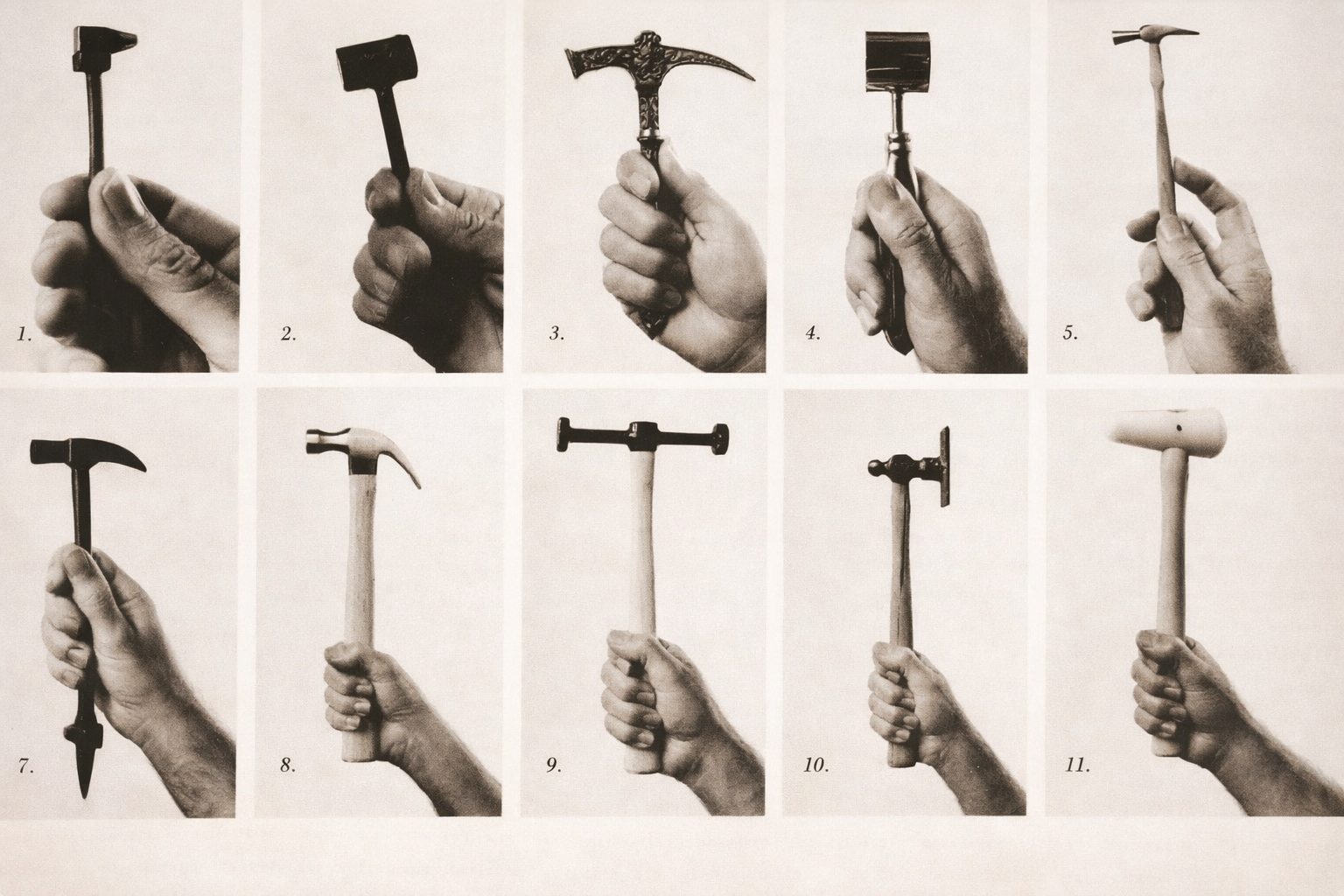
The culture of creatives is rich with objects that carry meaning beyond their function. The notepad. The mechanical pencil (and the D&AD pencil). The mood board. The printed proof. The agency reel. The Letraset book. The pitch deck, not as a business document but as an artefact of compressed creative thinking.
There is a reason the company is called First Concepts and not Final Concepts. The name reaches back to the moment in the creative process that is most alive, most playful, most charged with possibility. The moment before the idea has been resolved, when it could still become anything.
The sacred places of creative culture are also specific. The agency itself, at its best, is a sacred place: the open studio, the walls covered in reference material, the creative department as a world apart from the commercial machinery of the business. Soho, both London and New York, as the spiritual home of the creative industries. Cannes, not as a film festival but as the annual pilgrimage of the advertising world, where status is conferred and hierarchies are reinforced. The edit suite. The print studio. The presentation room where the work lives or dies.
These places are becoming endangered. Remote work has dispersed the studio. AI has collapsed the distance between brief and output. The physical spaces where creative culture used to reproduce itself are thinning out. First Concepts has an opportunity to become a digital sacred place: the workspace where taste is visible, where creative judgment accumulates, where the culture of making is preserved even when the makers are distributed. This is not a feature. It is a cultural position.
Rituals and cadences
Creative work is structured by rituals that outsiders rarely see. The tissue session, where rough ideas are presented to a client for the first time, fragile and unfinished, before they have been resolved into polished presentations. The crit, internal or external, where work is examined, challenged, and refined. The pitch, which is the supreme ritual of agency life: weeks of compressed intensity, late nights, the entire team aligned toward a single moment of performance. The brainstorm, which everyone mocks and everyone still does. The Friday afternoon review.
These rituals have a rhythm. The pitch season. The award submission cycle. The campaign calendar. D&AD and Cannes in the spring and summer. The new business pipeline that surges and retreats. Creative culture is seasonal in ways that mirror the cadences of older cultures: there are periods of frenzy and periods of fallow, and the people who have been in the industry long enough know the rhythm in their bodies.
First Concepts should be designed to fit these rhythms, not to impose new ones. The pitch pack pricing model described in the commercial strategy reflects this instinct: agencies think in pitches, not in monthly subscriptions. The product should feel like it belongs in the natural cadence of creative work, present during the tissue session, indispensable during the pitch crunch, quietly accumulating value during the quieter periods between.
Morality, taboos, and the status hierarchy
Every culture has a moral code, and the moral code of creatives is fierce, specific, and largely unwritten.
The supreme value is the work. Not the business outcome. Not the client relationship. Not the revenue. The work. A creative who produces brilliant campaigns for bad clients is tolerated. A creative who produces mediocre work for good clients is pitied. The hierarchy is clear: the quality of what you make is the measure of who you are.
Taste is the primary currency of status. You cannot buy it, inherit it, or fake it. You either have it or you do not, and everyone in the room knows which. A junior designer with genuine taste will be respected by a creative director in a way that a senior strategist without it never will. Taste is also the thing that cannot be taught, only developed through immersion, practice, and exposure to good work. This is why creative culture is so resistant to AI tools that promise to automate creative judgment: the culture believes, correctly, that taste is earned, not generated.
The taboos follow from the moral code. The greatest of them is stealing. Taking someone else's work and presenting it as your own is the cardinal sin of creative culture, the thing that ends careers and reputations permanently. It is not a legal concept. It is a moral one. The industry runs on originality, on the belief that what you produce came from your eye and your judgment, and passing off another person's work violates the deepest contract the culture has.
This is also where creative culture contains its most productive contradiction. Good artists copy, great artists steal. The line is attributed to Picasso, though Picasso probably took it from T.S. Eliot, who may have taken it from someone else, which rather proves the point. The distinction is between stealing output and stealing process. To copy someone's finished work is plagiarism. To absorb their way of seeing, to let their sensibility pass through yours and emerge as something new, is how culture advances. Every creative knows this distinction intuitively. Your references are not things you copy. They are things you metabolise. The mood board is not a shopping list of things to reproduce. It is a map of the sensibility you are building toward.
This is precisely why AI provokes such deep suspicion in creative culture. The machine appears to do what the culture forbids: it ingests the work of others and produces outputs derived from that work. Whether this is closer to plagiarism or to influence depends on who you ask, but the anxiety is real and it touches the most sacred taboo the culture has. Add to this the other taboos AI threatens: mediocrity, the great sin, because generative models regress to the mean. Showing unfinished work to the wrong audience, because AI makes it too easy to produce something that looks finished before anyone with taste has touched it. Using stock solutions when you were hired to produce something distinctive. Producing volume instead of quality. Allowing the tools to flatten the work into the undifferentiated median of everything the model has seen before.
This is the minefield First Concepts must cross. The product runs on AI. The culture it is selling into views AI through the lens of its deepest taboo. The resolution is not to hide the AI or to apologise for it. It is to position the AI on the right side of the distinction the culture already makes. The tool does not copy. It helps you metabolise. It does not steal output. It accelerates the process by which your references, your taste, your accumulated judgment become visible and operational. You are still the designer. And the persistent record of every decision, every reference, every direction you chose and why, is the proof that the work is yours.
States of ecstasy and the transformation
Every culture offers its members moments of transcendence. In cycling, it is the climb, the sprint, the moment of pure physical expression. In creative culture, it is the moment the idea lands.
Every creative knows this feeling. You are in a room, or at a desk, or in a conversation, and something clicks. An image, a line, a connection between two previously unrelated things, and suddenly you can see it. The whole campaign. The whole product. The whole world of the idea, complete and coherent and obviously right. Everything before that moment was noise. Everything after it is execution. The moment itself is the reason people stay in the industry despite the hours, the politics, the clients, and the pay.
First Concepts should be designed to serve that moment. Not to generate it. Not to automate it. To protect it. Conor's windshield metaphor is the right instinct here: early ideas are fragile, and most tools crack them. The product is the space where the spark can catch, where the first concept can be held and developed and shared without being crushed by the machinery of production.
The cultural transformation First Concepts offers is this: you are the person whose taste matters. In a world where anyone can generate output, you are the one who knows what is good. You are not being replaced. You are being proven right. Everything you learned, every reference you collected, every judgment call you made over years and decades of practice, that accumulated creative intelligence is the scarce resource. The machine does the mechanical. You do the meaningful. And for the first time, there is a tool that makes your taste visible, persistent, and compounding.
This is the identity First Concepts is selling. Not a software subscription. Not a productivity gain. A confirmation of what creatives have always believed about themselves: that the eye matters, that the instinct matters, that the difference between something good and something great is a human difference, and that no amount of computational power will change that.
The cultural architecture
To make this operational, the cultural elements First Concepts should inhabit and express are:
Heroic archetypes: the Creative Director, the Maker, the Hustler, the Protector. Symbolic objects: the mood board, the first sketch, the pitch deck as creative artefact. Sacred places: the studio, the presentation room, the workspace where taste accumulates. Language: taste, craft, judgment, coherence, the work, holding the thread. Rituals: the tissue session, the crit, the pitch, the Friday review. Morality: the work is sacred, taste cannot be faked, mediocrity is the enemy. Founding myth: there was a golden age when craft had authority, and it is coming back. Tribes: creatives vs. suits, indie vs. network, taste-led vs. process-led. Hierarchies: taste as the primary currency of status. Taboos: stealing work (the cardinal sin), and by extension AI slop, stock solutions, showing unfinished work to the wrong audience. Emotions: the thrill of the idea, the anxiety of obsolescence, the pride of craft. States of ecstasy: the moment the idea lands. Rites of passage: your first pitch win, your first award, making creative director.
Every touchpoint of the product, the marketing, the language, the visual design, the onboarding experience, the way the tool behaves when you open it, should be tested against this architecture. Does it feel like it belongs in the world of creatives? Does it respect the codes? Does it reinforce the identity that creative professionals have spent their careers building?
If the answer is yes, the product becomes something more than useful. It becomes something people identify with. And identification, not utility, is what builds a brand that lasts.