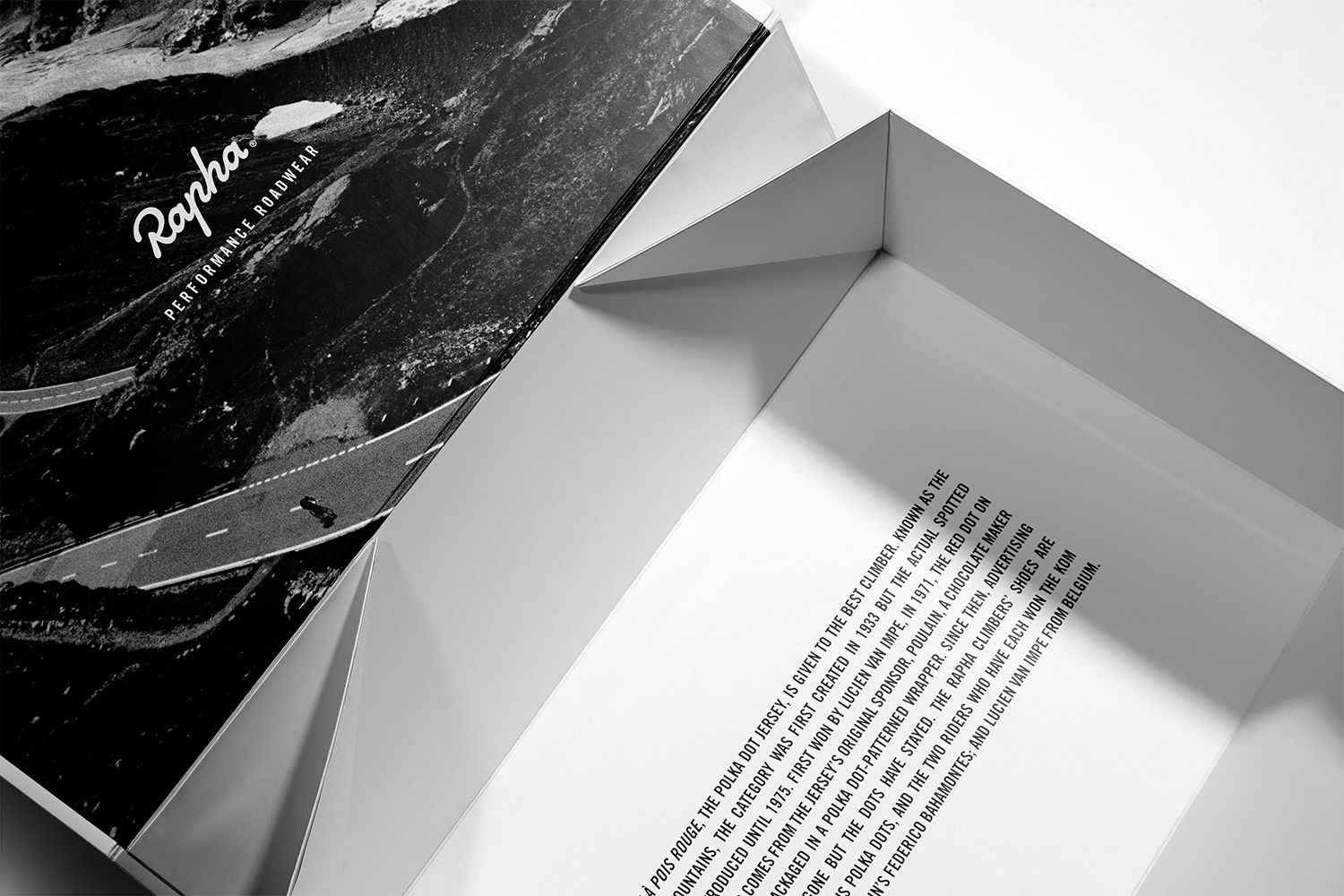
In 2004, cycling was perceived as a niche, style-free subculture lacking broad appeal. Rapha aimed to redefine cycling, transforming it into a compelling, aspirational lifestyle.
I led the brand's entire creative output, shaping Rapha's design language and customer experience — from the logo, apparel design, and fabric selection, to the website, photography direction, content, events, and our first retail spaces.
Rapha became cycling's defining brand, reshaping the sport into a globally recognised cultural phenomenon. The approach has influenced industries far beyond cycling, becoming a benchmark widely studied by management consultancies and business schools.
Simon and I were marketing veterans. We'd been selling brand strategy to clients for a decade. But when we started Rapha, we didn't follow the process. No target demographics. No mission statements crafted on a Friday afternoon after lunch. No design guidelines. We simply knew that cycling was about suffering, glory, sacrifice, crap French hotels, sinister Belgian cobbled hills, and the noble slog of a rider's rituals. We wanted to share this absurd beauty with the world.
Our process wasn't managerial but cultural. We immersed ourselves in the mythology of European road cycling — its heroes, landscapes, and rituals — and I built aesthetic, symbolic and product systems around it. Rapha was not strategy. It was anthropology. An anthropological distillation of cycling culture.
We didn't target a demographic. We created the brand for ourselves — English, upwardly mobile, middle class, design-obsessed, Europhile. The starting point was a book that Simon had been given a few years before — Le Tour De France Intime. We supplemented this on trips to France to gather more material. Old magazines. Toys. Lead figures. Posters. The Rapha brand is not about sports clothing. It is about the Euro cycling fantasy of two Londoners who thought it was cool.
The cultural context
Most management teams believe their brand is about them. The company they are running. Their business. But it's not true. People don't connect with strategy, or purpose, or mission in its purest sense. People connect with symbols, mythology, stories, aesthetics and meaning.
The best brands are not about themselves, their products or corporate goals. The best brands reach out into the world and grasp something bigger. They capture, embody and recombine parts of culture. Land Rover isn't about cars — it's about upper class rural British utilitarianism. Guinness isn't about stout — it's about Irish poetry. Ralph Lauren isn't about fashion — it's about a fantasy of American aristocracy. And Rapha isn't about cycling kit. It's about a British fantasy of European cycling.
We read the world visually, not rationally. We decode meaning through symbols. Socially, we orient ourselves through tribes — clusters of shared aesthetics, values, language, rituals, prejudices, codes — and within each tribe we instinctively recognise hierarchies of authenticity, expertise, and authority. We don't use brands to make purchasing decisions. We use them to transform our identities. A uniform, a passport, a mythic new identity that signals who we have become.
Research and immersion
How did we create an authentic fantasy of European cycling? Research and immersion. We strived to understand the beauty and banality of cycling. Relentless. Cruel. Brutal. Egotistical. Disappointing. Banal. Corrupt. We wanted the vibe of the glory years. No helmets, no sunglasses. Human. Suffering, Hollywood-like glamour.
We wanted to understand the sport's quintessential European-ness. What was it about Armstrong that made him so antithetical. We wanted to capture the rituals and routine of cycling. Transmit the unspoken codes. Elevate the mundane. Glorify the sacred mountains and cobbled climbs. We wanted it to feel like it had been around for decades. Refined and elevated over many iterations. A minimalist version of 1950s supermarket graphics.
Cultural fusion
We combined cycling culture with borrowed influences from luxury, fashion, music, drugs and London subcultures. We were based in Camden during the height of the hedonistic 2000s music scene.
Luxury meant elegant type, clean designs, black and white photography, black on black embroidery, high quality fabrics, attention to detail. Road cycling and 70s punk share a hollow-eyed, amphetamine-fuelled cynicism. The arch, skinny subcultural elitism of 90s heroin chic echoes the weight-obsessed, judgemental hierarchy of the peloton. The destructive nihilism of rock music. The underclass of squat-living 2000s London cycle-couriers.
Provocations
I rode about in Mapei kit in central London to gauge reaction. We made a gold-plated leg shaving kit. We sold an absurdly over-engineered coffee machine. We fucked with hierarchical codes — black socks were cheaper than white socks. We bullied employees into shaving their legs. We revelled in the darker side of the sport. I designed a t-shirt with the bio markers of a positive EPO test but didn't tell anyone what it meant. We celebrated chancers, cheating, smoking in the peloton, anti-heroes.
We ignored Americans who refused to buy our products until models wore helmets. We refused to stop promoting all black kit. I put a pack of Greek Assos cigarettes in shots as reverse product placement. We got the models drunk sitting on the Koppenburg the night before riding 200k in Flanders. We made models take freezing baths. We booked revolting 1960s French hotels for glamorous shoots. We intentionally pissed people off to create controversy — and sneers from Cycling Weekly.
Rapha was also — to be honest — a bit wanky. A ridiculous pastiche. We knew this from the start, but never admitted it publicly. It was silly, pompous and rather self-indulgent. A beautiful fantasy.
The brand principles
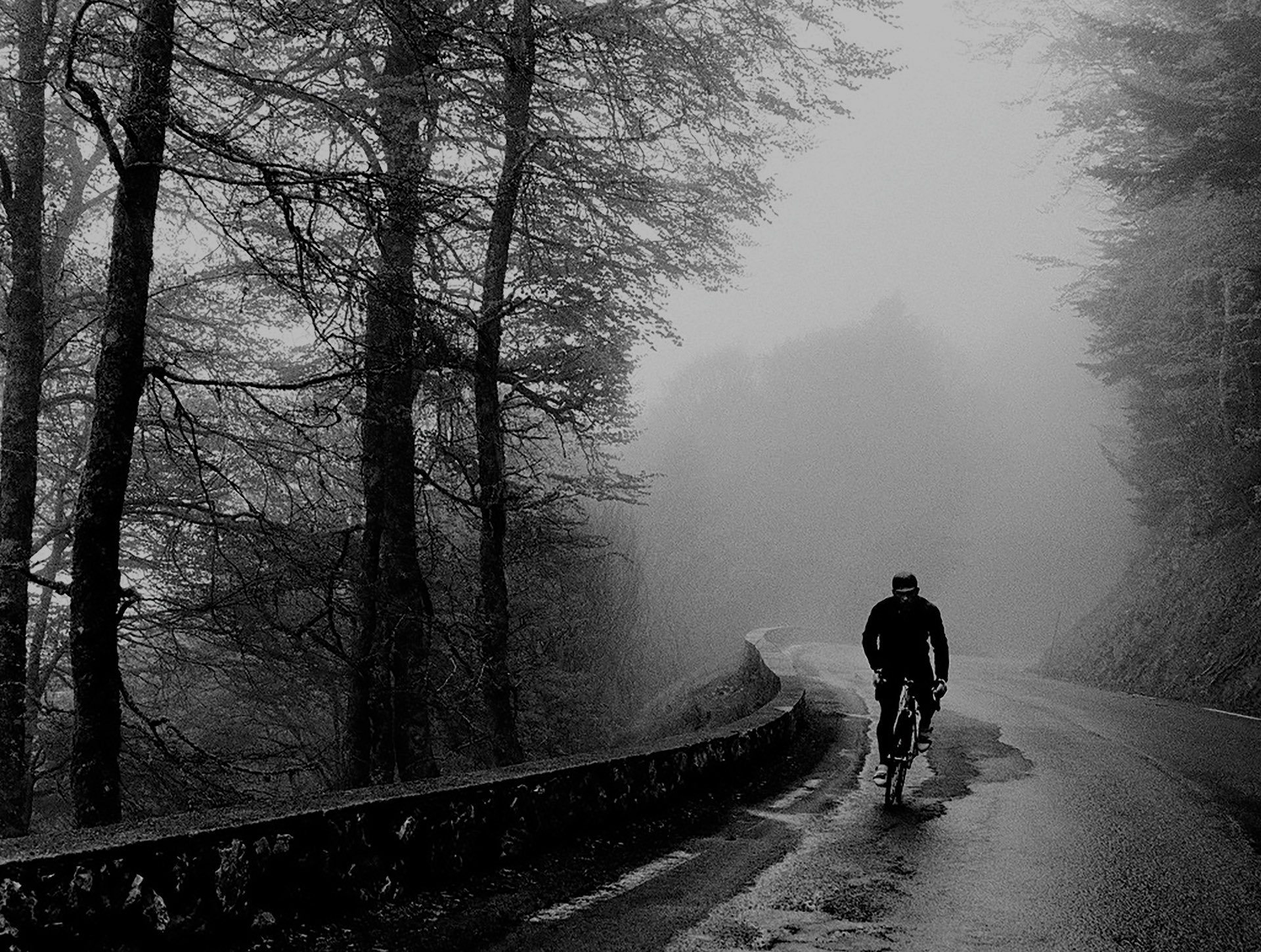
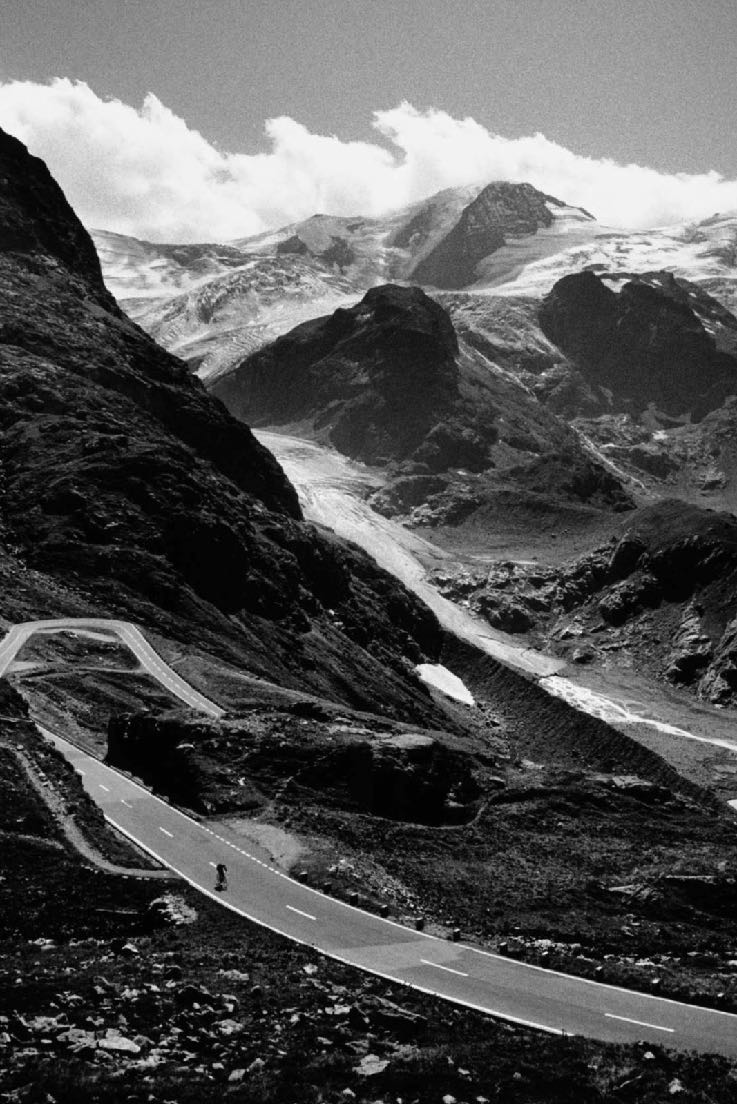
The cultural context was a British fantasy of European cycling. Glory through suffering. France, Italy, Belgium as sacred heartlands — ritualised landscapes. Glamourising the noble banality of the rider's life: chipped cups, damp socks, autoroutes, dawn winter training. Suffering as myth, ritual as culture.
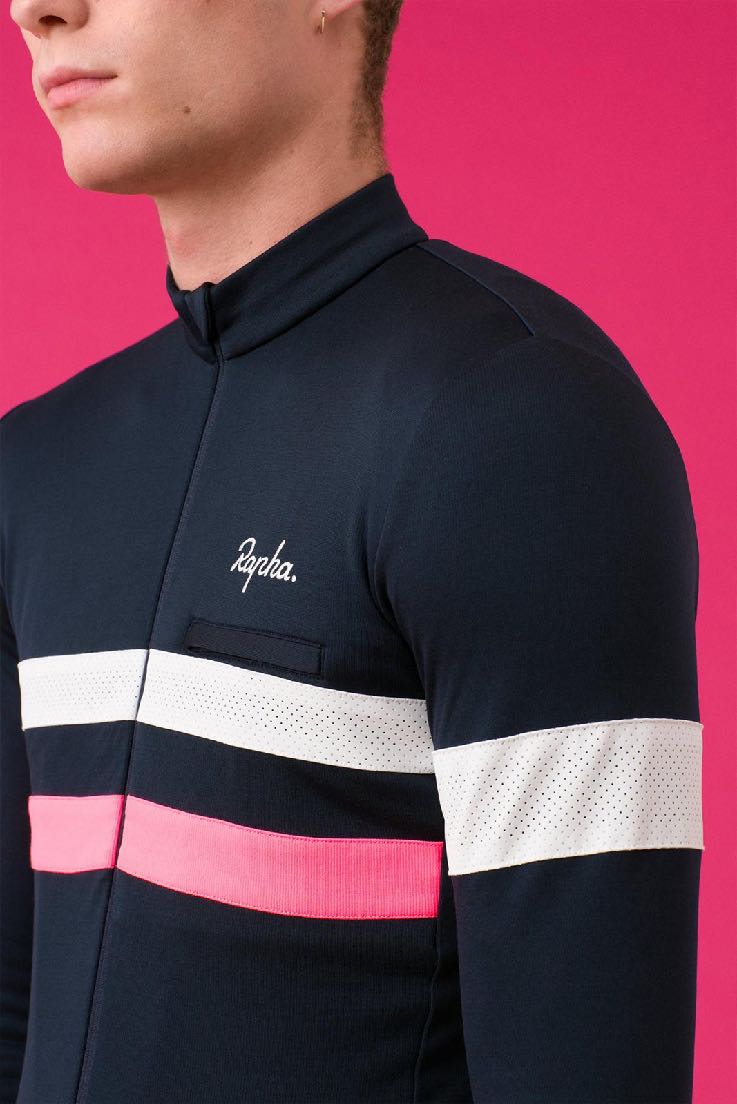
The visual system was inspired by mid-century European commercial graphics. Supermarket packaging, signage, food brands — pared back to essentials. The arm stripe became a distillation of 1950s jerseys. Typography: functional, neutral, timeless. The result was minimalist but established — as if Rapha had existed for decades.
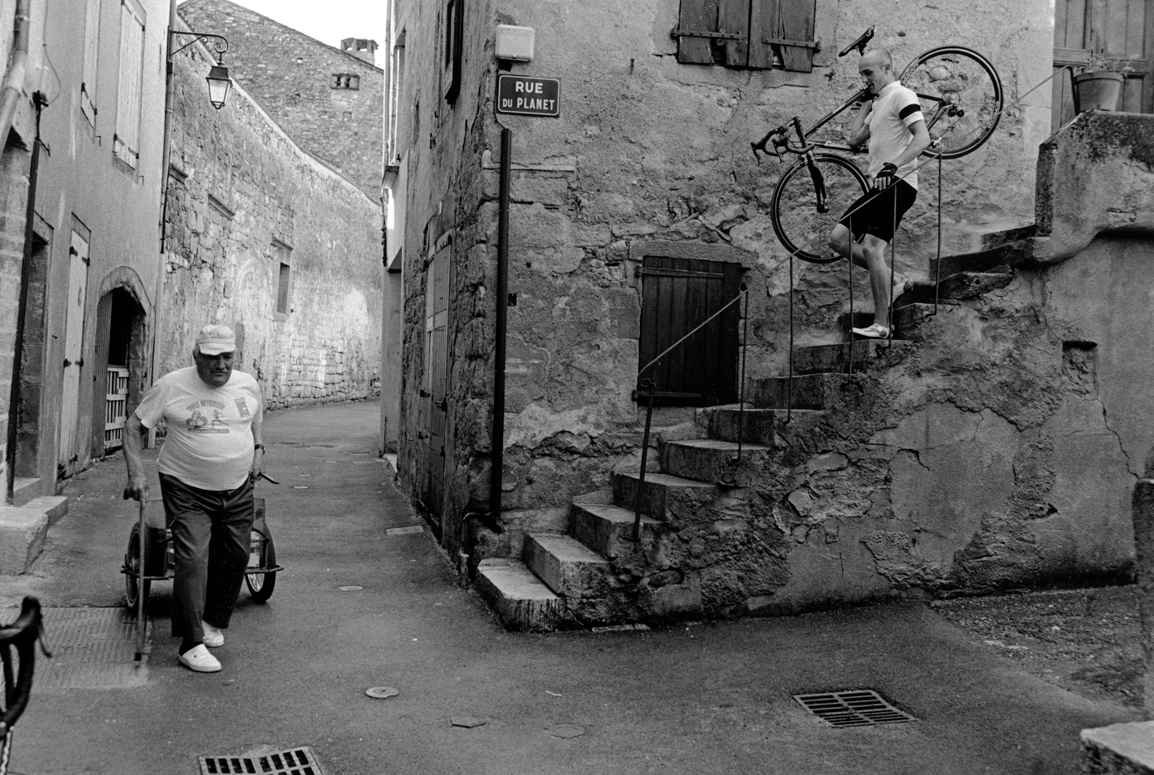
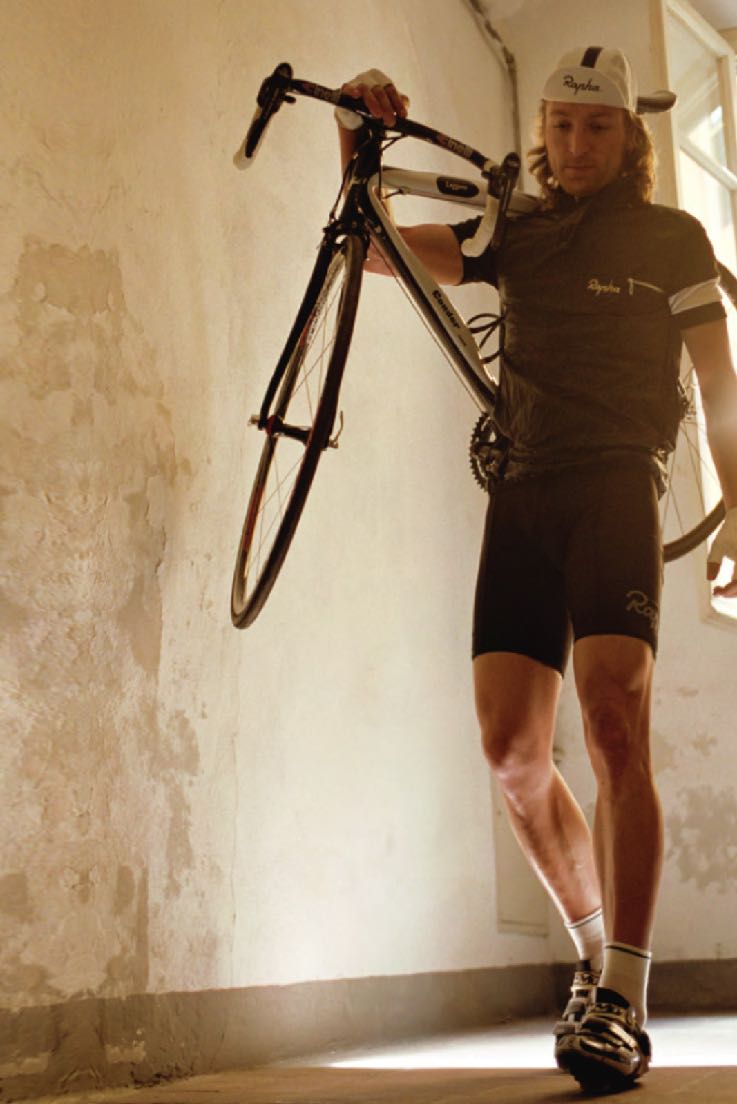
Casting was about faces with character. Lean, obsessive, monastic. Models who look like they belong in Roubaix or the Cevennes — not Malibu. The tone fused luxury branding codes with cycling mythos. We shot riders like backstage rockstars — gaunt, obsessive, unguarded. Cues from heroin chic, amphetamine punk, seedy hotels, clandestine rituals. The emotional palette was suffering, glory, nostalgia, obsession, compulsion.
The photography focused on rituals, not riding. Method-driven — we created authentic tasks and environments. Shot reportage style, as if intruding on private worlds. The kit was secondary. The truth of the moment came first.
Geographically, the brand was anchored in Europe. France was the theatre of suffering. Italy was elegance and style. Belgium was grit and mud. The Euro-centre was non-negotiable. And here's the thing: the European fantasy plays better abroad — in the US, Japan, the UK. Distance amplifies the romance. The centre of gravity had to stay European.
Why it worked
Rapha's early success was built on mythology, not marketing. Its cultural input came from deep immersion in European cycling: pain, suffering, glory, heroism. The hollow-eyed domestique, the sacred climbs, the brutal hotels and damp socks of a life on the road. It romanticised the beauty and absurdity of suffering — the glory and the futility of endurance.
It was not about performance metrics but transcendence through pain. We took a middle-class British fantasy of continental cycling and elevated it into a symbolic world — part Fellini, part punk, part fashion editorial. The result was not a lifestyle brand but a transformational one. Customers didn't just buy kit. They enacted ritual, learned language, and joined a myth. Became, even for a moment, a European cyclist.
The brand worked because it elevated sport into mythology. A cultural system codified into visuals through which people could inhabit an idealised version of themselves. People were obsessed. Spent thousands. Tattooed Rapha on their calves. The aesthetic is now cycling orthodoxy. We'd disrupted an entire industry.
What went wrong
Rapha's crucial mistake was that it believed to broaden its appeal, it had to broaden its brand. Between 2010 and 2020, it drifted from the continental myth of cycling — a romantic core of hardship and grace — toward a flattened, generic, Americanised idea of cycling lifestyle, inclusivity and participation.
As the cultural centre of gravity shifted, the US team's influence extended beyond operations and sales into tone, imagery, and worldview. Rapha began to sound as though it needed to speak American to be understood. In doing so, it surrendered the very European cultural capital that had made it distinctive — the depth, melancholy, and beauty that defined its early voice. Americans love European brands. They don't want Ferrari to become less Italian, or Dom Perignon to disguise its French origin story. To succeed in the US market, Rapha should have doubled down on its European cycling fantasy.
The women's voice was softened — made warmer, friendlier, more inclusive. Models smiled. Group rides replaced solitude. The assumption seemed to be that the brand's original tone alienated potential female riders. But in shifting tone so dramatically, the women's world and the men's world began to feel like different brands. The answer isn't to make the voices identical, but to root both in the same cultural DNA. Different expressions of the same belief system.
Team Sky gave Rapha authority and visibility. It validated the brand within elite cycling. But proximity dissolved the poetic distance that made Rapha powerful. What began as a mythic lens on cycling's soul was replaced by the cold precision of marginal gains and corporate partnerships. The dream of the peloton became literal and televised. The interpreter became a sponsor — part of the system it once mythologised.
The styling lost its edge. Technical replaced emotional, generic replaced poetic, and a kitsch retro nostalgia took the place of its classical roots. As creative leadership churned, the original design intelligence slowly evaporated. The idea of refined mid-century European graphics gave way to a bland, default sports-tech aesthetic. Collaborations, once used sparingly to punctuate the brand's narrative, became its main event. What had been a focused design language turned into a collage of borrowed identities.
Quality declined and the range architecture became confused. What was once a tightly edited system became a bloated matrix of sub-ranges, capsules, and collabs. Materials and construction drifted toward efficiency over excellence. Products began to feel sourced, not designed.
In the pursuit of growth, Rapha traded meaning for inclusivity, distinction for reach, suffering for participation. The brand that once sold transcendence began selling involvement. Rapha can, and should, evolve to encompass the full spectrum of cycling — gravel, bike-packing, track — but it must do so through a single, coherent idea. A thru-line that binds every discipline back to the original myth: the pursuit of beauty and truth through effort.